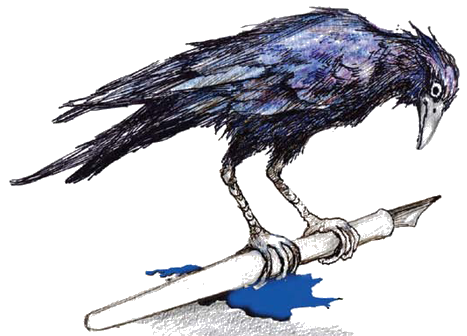
Speech patterns in the South have long roots twisting back to the arrival of the Scotch-Irish settlers into the Appalachian and Ozark Mountains. I’ve used some of these patterns and customs in my forthcoming novel, The Blue Bottle Tree, a tale of moss draped revenge.

Cabin with haint blue shutters to ward off evil. The roof is tin. Letta Davis and her family reside in a similar cabin behind the Butler mansion at the edge of the woods.
Here’s a sampling of some verbal and non-verbal language patterns found among Southerners. Language patterns across social, racial, and cultural lines represent more than the actual, spoken words.
- Whites, especially those with senior or higher status, prefer to control the direction of communication. Those with lesser status never speak first. This is especially true for non-whites.
- Direct eye contact denotes equality, or in some cases, a challenge. A blank or expressionless face offers no clue as to mood or status hence can be a tool to protect or challenge.
- Those with senior status are addressed as Mrs., Ma’am, Mr., or Sir by all others. Use of Miss before a given name can be found across racial lines and is a semi-formal style of address for women. Missus, sah, or mistah are slurred forms of more proper address.
After living decades in New York, Susan Pea Butler returns home and is greeted by the family housekeeper Letta. Standing on the family mansion porch, Letta watches Susan Pea park her car and approach. She waits for Susan Pea to speak first.
“‘Hello Letta.’ Susan Pea stopped near the porch. Letta nodded, her face blank, her speech deeply accented and slow. ‘Been ‘specting you since yesterday. Missus Eve gonna be glad you done come back home.'”
There is a somewhat casual bond between Susan Pea and Letta, a holdover from previous years and their family histories. The conversation unspools as they exchange niceties.
“’It’s good to see you again. I only wish circumstances were different.’ Susan Pea cocked her head to the side, shaded her eyes. She spoke with the quick, clipped accent of the North, something deliberately acquired over her years among the Yankees. ‘I’ve missed your common sense.’ ‘Humph. Go on with you now.’ Letta dismissively waved her hand. ‘I know you think I’m too opinionated. ‘Specially since I’m hired help.’ Susan Pea acknowledges the comment, brushes it aside, and steps into her childhood home to see her sister-in-law Eve, who is dying of cancer.”
Most common in the South is the use of “ma’am” and “sir” when speaking across age group, social, or racial lines. This is especially true of young speakers or non-whites. Among non-whites, the salutation is slurred to missus and mistah. The case in point, (regarding the case in point) Letta refers to Eve, her mistress, as Missus Eve, and to Major, the novel’s antagonist, as sah or mistah Butler.
In a different example from The Blue Bottle Tree, we see the antagonist Major question Letta about an incident the previous night in the white section of a nearby town.
“’You folks got a boil going on down on the southside,’ he said. ‘Seems a Lee Town bootlegger and his brother died in a house fire Saturday night. Talk has it that one of y’all set it going.’ Letta continued working the dough, did not look up. ‘I’ll admit those two were worthless hog wash,’ Major said, ‘but we can’t have some darkie killing white men under any circumstances.’ He poured himself a mug of coffee, added a hit from his flask, and peered at Letta. ‘You know anything about it?’ He blew across the cup, watched his housekeeper with narrowed eyes. ‘Naw sah.’ She carefully averted her face, gripped the wooden biscuit cutter, cut rounds, and placed them on a baking sheet.”
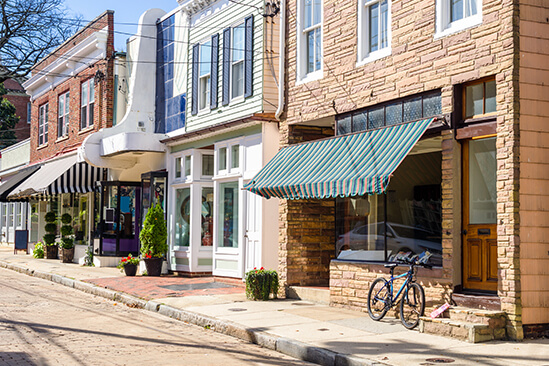
What’s Left Unspoken: Respect or Lack Thereof
An address across racial lines reflecting less than respect are the terms “boy,” “gal,” or “girl” used for an adult. These terms are demeaning and derogatory. Common forms of address during the 1960s-1970s include “uncle,” “auntie,” or “mammy,” denoting either recognition of age or a “pet/protected” status across racial lines. Typically, there is no familial connection between the individuals. These terms may be thought of as endearing but are often perceived as demeaning by non-whites.
Non-Verbal Communication
Likewise, eye contact and facial expressions constitute non-verbal communication which provides important social and emotional information. Most often, without consciously doing so, individuals search eyes and faces for positive or negative mood signs. In the Southern historical context, eye contact provides the strongest emotions during an interaction between racial or age groups. Conversely, ignoring the accepted conventions may carry a challenge. Intent is reflected by tone and facial expression.
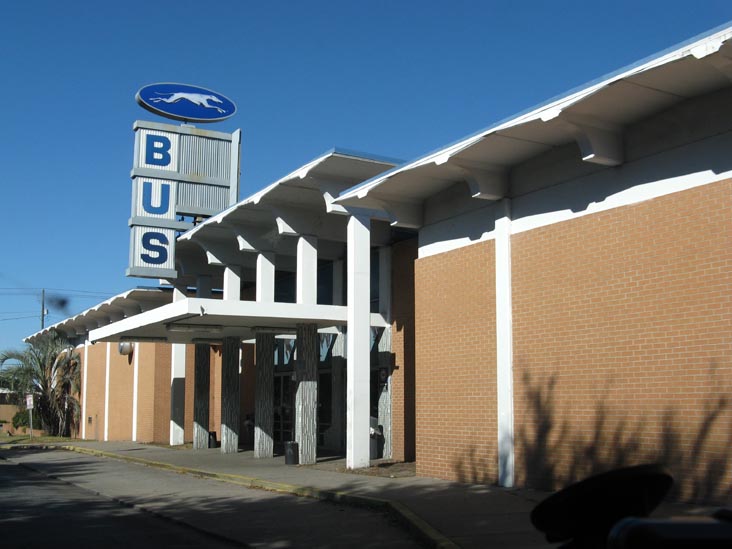
Greyhound Bus station that might have been found in Bains Bridge, Georgia during the 1960s-1970s. The actual picture is of a Savannah, Georgia, station.
In one scene, housemaid Letta prepares to leave town. While purchasing her bus ticket, the lone ticket agent, questions her about her intentions. She carefully answers his questions with downcast eyes and blank face. She pushes the fare across the counter to him.
He does not touch the money. She pushes it further across the counter. He stalls. She then stares directly into his eyes and speaks boldly. Confused by her stare and actions, he takes the money and gives her a ticket.
Nothing Is Written Down
Customs, mores, and speech patterns are not written down. Southerners seem to absorb them through their cultural and social groups.
Think about how communication, verbal and non-verbal language, as well as customs, reenforces racism in today’s world. Think about how unconscious mannerisms and body language convey meaning beyond the obvious.
What Southern language patterns have you noticed?
 Nancy Hartney
What an interesting topic that doesn’t get much attention anymore. So much of the colloquialism and verbal/non-verbal communications like that are strong in the south, but I still see some of it here, too. I haven’t heard ‘mind your mouth’ since moving up here from s. Louisiana, lol, and it seems no one addresses people older than themselves with Mam and Sir anymore, or they just don’t do it much it right here where we live now.
What I love is the colorful idioms of the South. “He know which side of his bread is buttered on.”
Once in conversation with a black co-worker I said, “You ain’t just whistlin’ Dixie.” He replied, “You damn right. I sho as hell ain’t whistlin’ no Dixie!” Then we both laughed. 🙂
A friend of mine who hails from Tennessee, has unique expressions and an accent that are foreign to my NY State ears. I laughed when she described her Tennessee community as “a one horse town.” And when she wins a poker hand she says, “Come to Mama has to buy a new pair of shoes.”
I’m enjoyed reading this excerpt and the explanation. I feel badly when a Black person looks down and avoids eye-contact as if I’m superior. Even a cat can look at a queen.