
Southerners and southern life harbor rich traditions and customs not found in the North. In my forthcoming novel, The Blue Bottle Tree, there are subtle examples that give the South definition and shape, ranging from how to treat guests to more public behaviors dating back decades.
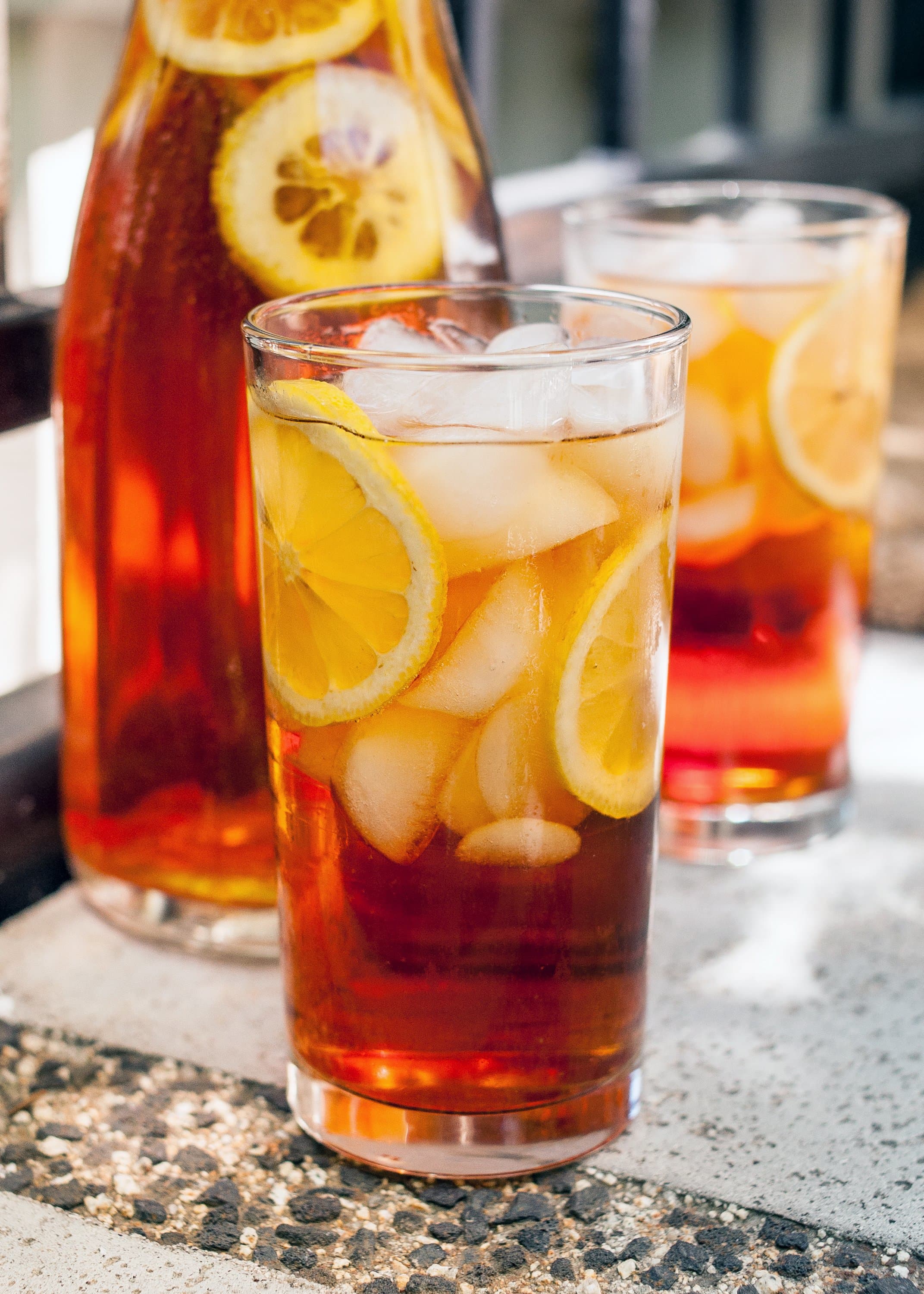
Southerners customarily offered refreshments to visiting guests is one example. (BTW, other international cultures have this custom.) In the case of Bottle Tree, tea was the casual beverage of choice frequently served during the 1960s-1970s during casual porch visits, church potluck suppers, and in restaurants. Specifically, it had to be tea sweetened with granulated sugar and served cold with ice. In my novel, tea illustrates the contrast in customs between North and South which protagonist Susan Pea Butler describes.
“Here in the South, sweet tea is tradition, culture in a glass. It’s almost a religious duty to drink the syrupy stuff.”
She goes on to comment that when ordering tea in the New York environs, it must be specified sweet, with ice, not hot in a cup. Even with those directions, she says the beverage was usually served with a few ice cubes (hence not really cold) and one packet of sugar.
Southern Customs Are Passed Down, Not Written Down
Later, in another scene, Susan Pea, entertains her niece Janie and housemaid Letta with talk about Southern customs that give the region its distinctiveness. Janie asks Susan Pea to ‘tell more’ and scoots her chair closer to the kitchen table. Susan Pea expounds on a few differences.
“They (i.e., northerners) don’t put much stock in our ways … wearing gloves to church on Sunday. Or to a funeral. No white shoes after Memorial Day. Always say nice things about people, especially the deceased. Lord’s Acre Day at the church.’
“Humph,” Letta said. “Pay you to remember them things. South got a dignity ain’t like no other place. … South also got stuff she hides.”
When sister-in-law Eve Butler dies from cancer, Letta and her son attend the local white church for the funeral. Most frequently, non-whites waited outside the church or graveyard during a service to show respect. In Blue Bottle, Letta defies custom due to her longevity with the Butlers by taking a seat inside but acknowledges the segregation convention with where they choose to sit and how to dress.
“Letta and her younger son, Elijah, sat stoic in the back, last row pew. They wore their Sunday best; she with gloves, modest hat, and Elijah in a white shirt, wearing his pappy’s tie.”
In another scene, Susan Pea recognizes Letta’s housekeeper status in a subtle comment. Neither Susan Pea nor Janie seems aware of Letta during the interchange.
“Letta padded barefooted across the porch, brought iced tea to cool the evening. Her face, deeply lined, reflected fatigue. She sat in the swing, half listening to the conversation.”
The three sit outside drinking iced tea…until Susan Pea abruptly says, “Letta, you mind getting us some lemon for the tea. Always need to balance the sweet and sour.”
Letta frowned, heaved herself up, and padded inside.
Letta leaves the porch and returns with a small bowl of lemon slices. She announces she has work to do and walks back into the house. Neither Susan Pea nor Janie appear to take any notice of her absence.
At another point in the conversation among the three women, Susan Pea expounds on the similarities between some Southern cities and New York.
“Now that I think about it, it’s similar to New Orleans but without the humidity and river odors.”
Both cities allowed limited racial mixing, most commonly at night (examples: New Orleans French Quarter, New York Harlem), but with strict adherence to other practices: whites only front entrance and non-whites the backdoor.
Drinking fountains, restrooms, and ticket counters were likewise labeled ‘Whites only’ across the South. A slow change in signage and use of public facilities, schools, hotels, transit and other services began to materialize as a result of the 1964 Civil Rights Act. That cultural and social change is ongoing.
I have a vivid memory of my grandmother harshly jerking me out of a store for drinking at the wrong fountain. I was about age six at the time. A clear example of learning from one’s elders without actual written rules.
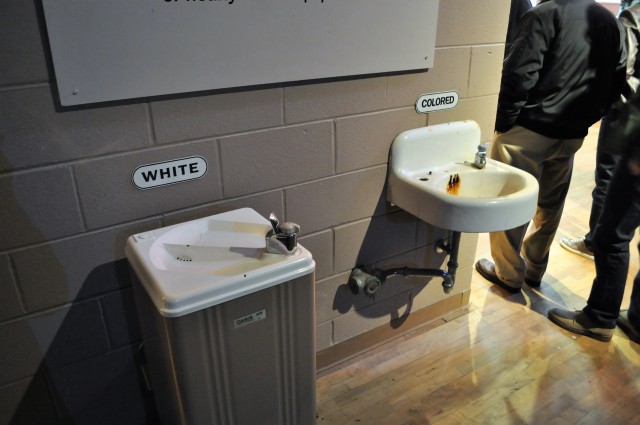
Fountains such as these have been removed, signage taken down, and a single drinking source made available. Today old fountains can be found in the Birmingham Civil Rights Institute (Ala.) and other museums as a reminder of the 1960s struggle.
I’d love to hear from you about your experiences. Have you had something that stands out in your memory? Can you think of other customs and/or laws that have changed in the South in your memory? And, by the way, do you like sweet tea?
 Nancy Hartney
It’s usually too sweet for me so I order without the sugar, but I find it funny having to order “unsweet tea” at restaurants in the South. I look forward to reading Blue Bottle Tree!
It does seem strange to order unsweet tea in the deep South. Times, tastes, and health concerns certainly change.
I do like sweet tea, but can’t stand thinking of all the sugar on my teeth or in my body.
Back in the day, no one thought about sugar as being unhealthy. Today, it’s definitely a consideration. Homemade sweet tea has largely vanished but been replaced by other products and sports drinks. Even in the deep South, sweet tea as served in restaurants has indeed changed.